Most car enthusiasts will never forget the first moment they see a popular supercar in a parking lot. Many car enthusiasts will glance at the gauges and the top speed listed on them when they see an attractive car, because a sports car’s gauges are one of the most prominent features of its cabin.
The Dodge Viper created a similar sensation with its black and white analog gauges that were numbered up to 200 mph (320 km/h), and the installation of small performance gauges at the top of the dashboard also helped drivers keep an eye on the information from the 10-cylinder powerplant. Ferrari is also known for its analog gauges and its distinctive engine tachometer. Overall, it must be said that a sports car’s gauges are one of the most important features of its cabin and have a great impact on the car’s character.
Digital displays first entered cars in the 1970s, although they had very simple design and technology. The first navigation systems and small displays were introduced in the 1990s, allowing drivers to access things like trip computers, audio system information, and simple navigation. Touch-screen interfaces for cars appeared in the first and second decades of the new century, and this is where the display wars began between automakers, as each company tried to fit the biggest screen on its products.
Most cars use LCD displays, which rely on a backlight shining on liquid crystals to create an image. This process is similar to what we see in most TVs and monitors; however, OLED displays work by using tiny pixels that emit light, which produces better blacks, increases contrast, and offers wider viewing angles.
It’s also worth taking a look at the head-up display. General Motors and Nissan were the first brands to use this technology in their cars, and the first car to offer technology derived from fighter jets was the 1988 Oldsmobile Cutlass Supreme. Of course, this car’s head-up display only showed speed. After that, most GM products were equipped with head-up displays, especially performance models such as the Chevrolet Camaro and Pontiac Grand Prix GTP, and by the early 21st century, this feature became widespread, and today some models even use augmented reality so that the driver does not take his eyes off the road.
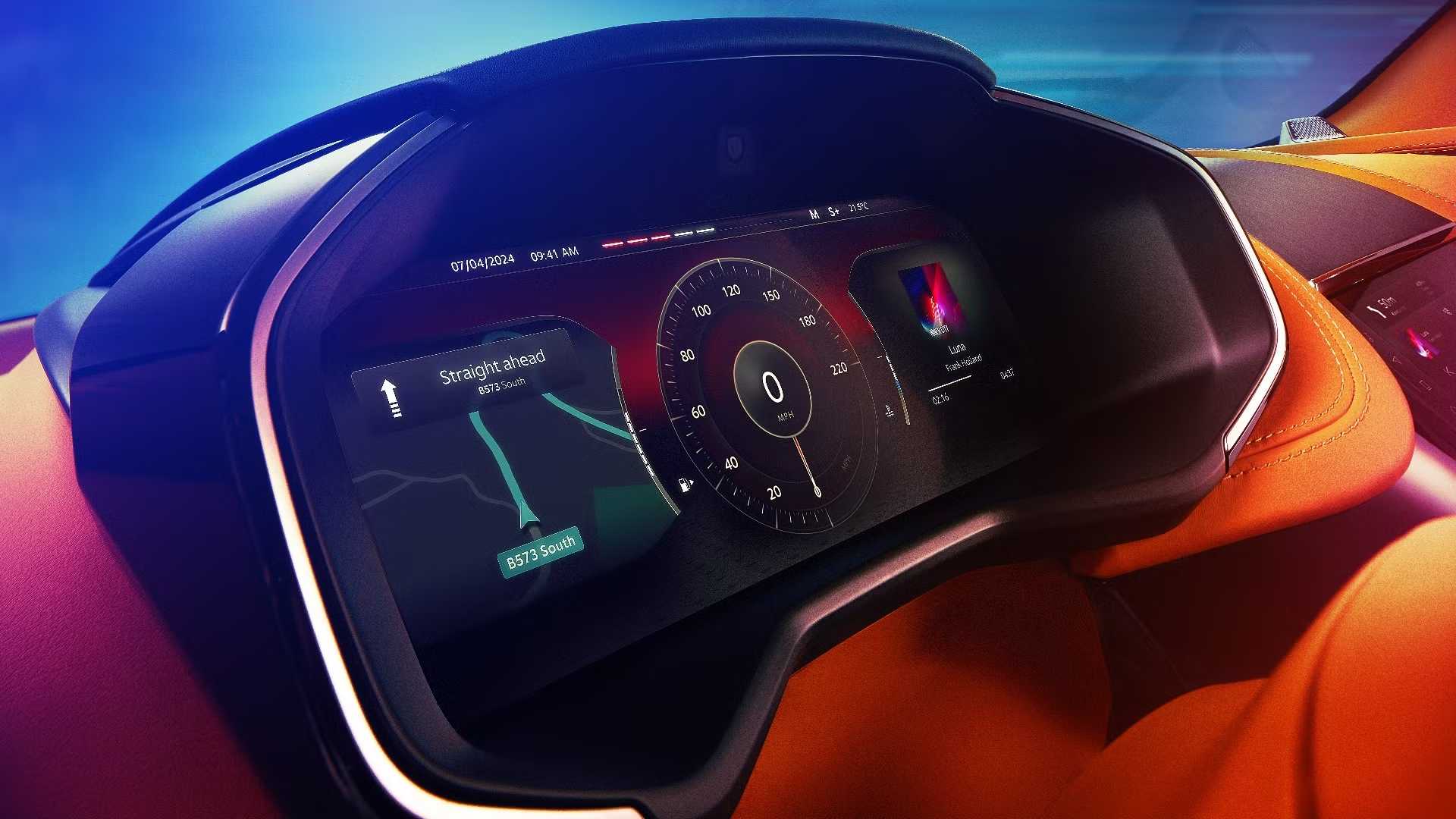
Modern digital dashboards can be minimal and simple, or they can be used to enhance the driving experience. This is done by instilling the feeling of popular racing games such as Gran Turismo and Need for Speed, and customizable displays with various animations and sounds are provided to evoke the feeling of a real game.
Until a few years ago, you had to go through a lot of trouble to install aftermarket parts like displays on older cars, but now you can get digital dashboards in mid-range cars. Digital dashboards offer a lot of customization options, including the ability to choose which information to display. Mercedes-Benz is particularly good at this, and its new models benefit from several highly customizable displays. The Ford Mustang is no exception, and some Dodge cars also allow drivers to manipulate the settings behind the gauges.
Digital dashboard technology can also work great at night. The new Mercedes-Benz SL’s MBUX system, which uses a “zero layer” on its large display, allows the driver to access key functions without opening submenus. The driver can also adjust the cabin lighting to create a good mood at night. The eighth-generation Corvette’s digital cockpit also has some tricks up its sleeve for nighttime driving. A rearview camera improves visibility and increases driver confidence in the dark. There’s also a stealth mode that lets the driver turn off all the cabin lights, including the speedometer and fuel gauges behind the gauges. This reduces eye strain and helps keep the driver focused on the road. Another strength of the digital dashboard is its improved safety for the vehicle and its occupants. Night vision systems in modern cars help detect pedestrians and animals. These systems use high-quality cameras to scan the road. Some cars even have advanced displays and gauges behind the gauges for data sharing and more.