Ending thirst with ultrasound waves; new technology produces water even from the air in dry regions

Technology
News
Articles
A new era in global electricity generation begins; clean energy overtakes coal for the first time
انقلاب در مدیریت ارتباط با مشتری با کمک هوش مصنوعی (AI)
The role of artificial intelligence in enterprise CRMs: from data to decision
Artificial Intelligence and CRM and its impact on business
The most advanced artificial intelligence platform on the planet; Nvidia Rubin introduced
Ending thirst with ultrasound waves; new technology produces water even from the air in dry regions

Ending thirst with ultrasound waves; new technology produces water even from the air in dry regions

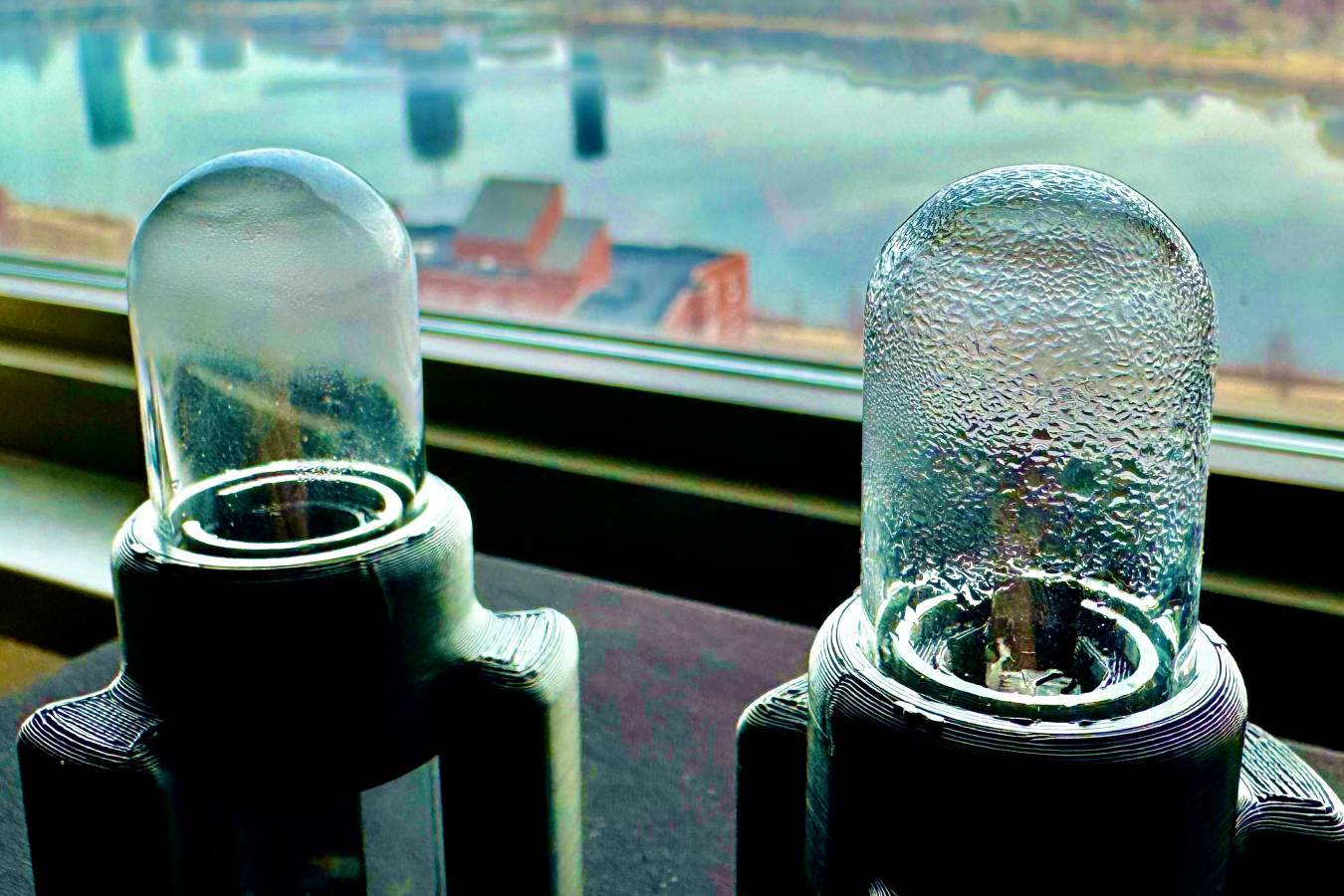
Researchers at the Massachusetts Institute of Technology (MIT) have developed a groundbreaking device that can extract drinking water from the air, even in the driest regions. The technology uses ultrasound waves to reduce a process that previously took hours or even days to minutes, potentially transforming access to clean water

Researchers at the Massachusetts Institute of Technology (MIT) have developed a groundbreaking device that can extract drinking water from the air, even in the driest regions. The technology uses ultrasound waves to reduce a process that previously took hours or even days to minutes, potentially transforming access to clean water for underserved communities.

Conventional air-water harvesting (AWH) systems collect moisture with sponge-like materials called adsorbents. The main challenge with these systems is that they require solar energy to evaporate and release the water from the adsorbent, a very slow and inefficient process. But the new MIT device changes that equation completely.

Instead of heat, the new device uses ultrasound waves to shake and release water molecules from the adsorbent. The core of the device is a ceramic ring that vibrates at a frequency above the human hearing range (over 20 kHz) when a voltage is applied. These high-speed vibrations break the weak bonds between the water and the adsorbent surface, releasing the moisture in the form of water droplets.

The prototype of the device is 45 times more efficient at extracting water than traditional evaporation. “Now we have a way to recover water quickly and effectively, and this could be a great source of water, especially for desert regions,” says Svetlana Boriskina, one of the project’s researchers.

Although the new device requires a power source, unlike solar systems, the researchers suggest that it could be combined with a small solar cell. In addition to providing energy, the solar cell could act as a sensor, automatically triggering the water-release cycle when the adsorbent is saturated. The research team envisions a compact home system the size of a window that can collect and release water several times a day, providing a sustainable source of drinking water.


Related news

A new era in global electricity generation begins; clean energy overtakes coal for the first time

Renewables have overtaken coal as the world’s largest source of electricity generation for the first time in history. New data ...

انقلاب در مدیریت ارتباط با مشتری با کمک هوش مصنوعی (AI)

In today’s competitive world, effective customer communication is no longer a competitive advantage, but a necessity. Customer Relationship Management (CRM) ...

The role of artificial intelligence in enterprise CRMs: from data to decision

For years, the purpose of CRM was to manage customer relationships. So for almost two decades, these systems were operating ...

Artificial Intelligence and CRM and its impact on business

Artificial Intelligence , CRM may seem like a strange and unexpected topic at first glance. But sooner or later, we ...

The most advanced artificial intelligence platform on the planet; Nvidia Rubin introduced

NVIDIA officially unveiled its Rubin platform, which will be the heart of the next generation of data centers. The platform, ...

Ending thirst with ultrasound waves; new technology produces water even from the air in dry regions

Researchers at the Massachusetts Institute of Technology (MIT) have developed a groundbreaking device that can extract drinking water from the ...

Search