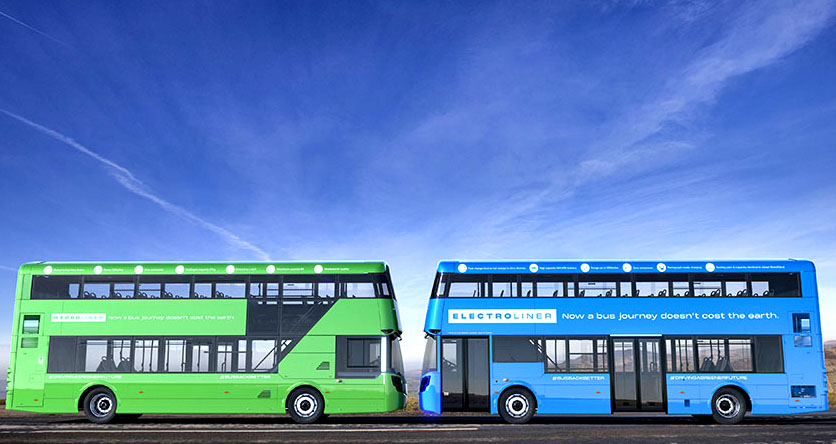
Public transport, especially buses, which are the backbone of urban mobility, play a key role in reducing or increasing these problems. For decades, diesel engines have been the main power source for buses, but now a global wave has begun to replace them with cleaner technologies.
Global growth of electric buses
According to international reports, the number of electric buses on the world’s roads has exploded over the past decade. China, as a pioneer in this field, is now home to hundreds of thousands of electric buses that make up the urban transport fleets of cities such as Shenzhen and Beijing.
Battery technology and the importance of fast charging
Lithium-ion batteries, which once had many limitations, have now achieved higher capacity and longer life cycles. Many new models can travel more than 300 km on a single charge, which is enough to cover most urban routes. In addition, fast charging stations and wireless charging technologies have also come to the aid of bus fleets, allowing for full charging during short stops along the way or at night.
The role of Chinese brands in pioneering the market
BYD’s diverse models, from electric minibuses to 12-meter city buses, have been able to gain the trust of city managers with their long range and good quality. Yutong, with the introduction of buses such as the E12 and E18, has been able to demonstrate impressive performance in international competitions in terms of energy consumption and passenger comfort. These two brands have now become a benchmark for other automakers and have defined new standards in efficiency and durability.
European automakers enter the market
With a long history of producing diesel and gas-powered buses, Europe is now on the path to transitioning to electrification. With its modern design, advanced amenities, and complete safety systems, this bus is considered a response to the needs of advanced European cities for green transportation.
Volvo has also been able to be present in many European capitals by introducing the 7900 Electric series. This Swedish brand, with its long experience in developing hybrid technologies, is now focusing all its efforts on electrification, and its buses are known for their durability, high build quality, and extensive technical support.
North America’s experience in fleet development
North America is also investing heavily in electric buses, given the size of its cities and the importance of its public transportation fleet. New Flyer is a pioneer in the United States, with its products being used in many cities, including Los Angeles and New York. In Canada, emerging companies such as Lion Electric have also entered the market, focusing on special designs for cold weather conditions and have been able to offer practical solutions. These companies not only supply the domestic market but also have plans to export to the United States.
Asia and the Widespread Electrification Wave
In addition to China, other countries in Asia have also moved rapidly towards electrifying their bus fleets. India, with serious air pollution problems in cities such as Delhi and Mumbai, has embarked on a massive program to replace diesel buses with electric models. Domestic companies such as Tata Motors and Ashoka Leyland have launched large-scale projects to introduce electric buses nationwide.
Passenger comfort and travel experience
The significant reduction in noise compared to diesel buses has made traveling with these vehicles quieter and more enjoyable. Advanced air conditioning systems, comfortable seats, and amenities such as USB ports and wireless internet have improved the level of service. Many citizens in cities where electric fleets have been launched refer to this development as a turning point in the quality of urban life.
Challenges facing the expansion of electric buses
Despite all the advantages, the expansion of electric fleets still faces challenges. The high initial cost of purchasing these buses is one of the serious obstacles, which, of course, is compensated in the long run by the reduction in fuel and maintenance costs. The creation of a widespread charging infrastructure also requires large investments and cooperation between governments and the private sector.
Successful urban examples
The city of Shenzhen in China can be considered a global model, as it was able to convert its entire bus fleet to electric within a few years. With more than 16,000 electric buses, the city has become a model for other countries.
The Future of Electric Buses in Global Transportation
The trend that has begun seems irreversible. With the advancement of solid-state battery technology, increasing energy storage capacity, and decreasing production costs, electric buses will soon become a completely economical and practical option for cities around the world. Extensive research is even underway into combining renewable energy with charging systems so that electric buses can run entirely on green energy.